MonitoringPublished
AmneziaWG vs VLESS REALITY vs Hysteria2: a comparison for server operators
They hide different things. AmneziaWG is WireGuard with its packet shapes disguised, over UDP. VLESS with REALITY looks like a TLS 1.3 connection to a real website, over TCP, and passes anyone without the key on to that website. Hysteria2 looks like HTTP/3 over QUIC and answers strangers as a web server. Choose by what your users' networks block: unknown UDP, QUIC, or TLS to unusual sites. Many operators run two of them side by side for that reason.
Tahir Mehmood10 min read
On this page
- What does each protocol actually hide?
- AmneziaWG: WireGuard with its fingerprint removed
- VLESS with REALITY: TLS 1.3 to someone else's website
- Hysteria2: an HTTP/3 web server
- How do they compare side by side?
- Which one is fastest?
- Which is easiest to run?
- How does each one fail, and how does that show up?
- So which should I deploy?
- How do I monitor all three?
All three are popular with operators whose users sit behind DPI, and they are often compared as if one of them must be best. They are not built to solve the same problem. This post compares them on the things an operator deals with: what each one hides and how, what a prober sees, speed, effort to run, client apps, and the way each one breaks. Versions checked: AmneziaWG 3.1 (amneziawg-go and tools, August 2026), Xray-core 26.10.31 and Hysteria 2.13.0.
What does each protocol actually hide?
Each one hides a different layer, and that decides where it works.
AmneziaWG: WireGuard with its fingerprint removed
AmneziaWG keeps WireGuard's handshake and encryption and changes what the packets look like from outside: the message type numbers, the packet sizes, junk packets before each handshake, and optional decoy packets that imitate protocols such as QUIC or DNS. Version 3.0 adds header protection (the remaining plain header fields encrypted with ChaCha20), random padding and random timers, and 3.1 adds random trailers and the option to stop sending cookie replies. The AmneziaWG documentation describes the goal of 3.1 as making statistical analysis of whole sessions harder, not only single packets.
What it does not do is pretend to be a specific real service from start to finish. After the handshake, the traffic is a UDP flow of encrypted packets without a standard protocol's structure. Like WireGuard, the server sends nothing back to a packet it can't authenticate, so an active prober sees silence. The parameters post explains every setting.
VLESS with REALITY: TLS 1.3 to someone else's website
VLESS itself is a thin proxy protocol that normally relies on the layer under it for encryption (recent Xray versions add an optional VLESS Encryption mode). REALITY is that layer. Per the Xray REALITY docs, it is "a modified form of TLS that uses the appearance and handshake characteristics of a target site as camouflage". The client sends a normal-looking TLS 1.3 ClientHello with the SNI of a real website (the target). A client holding the right key gets a temporary certificate and a proxy connection. Anything else is forwarded to the real target, so a prober that connects gets the real site and its real certificate.
With the xtls-rprx-vision flow, Xray also pads the inner TLS handshake (the one your browser makes through the proxy), which hides the size pattern of TLS running inside TLS. REALITY works with the RAW, XHTTP and gRPC transports, all over TCP. The VLESS explainer covers the protocol and its URI format.
Hysteria2: an HTTP/3 web server
Hysteria2 runs on QUIC and, per its protocol specification, behaves like a standard HTTP/3 web server to anyone without credentials. The real client authenticates with a special HTTP/3 request (POST /auth), and the server answers with status 233 when it accepts. Anything else is handled as ordinary web traffic, by the masquerade you configure: a directory of files, a reverse proxy to another site, or a fixed string. Without a masquerade it returns 404 for every request. Since 2.11 the client's QUIC handshake imitates Chrome's by default.
For networks that block QUIC itself, Hysteria2 has Salamander and Gecko obfuscation, which turn the packets into random-looking bytes. The docs are clear that the server is then no longer a valid HTTP/3 server. The Hysteria2 explainer covers Brutal, Salamander and port hopping in detail.
How do they compare side by side?
| AmneziaWG | VLESS + REALITY | Hysteria2 | |
|---|---|---|---|
| Transport | UDP | TCP | UDP (QUIC); fake TCP via mimic on Linux |
| What it looks like | WireGuard with random sizes and headers; optional decoys imitating QUIC, DNS and others | TLS 1.3 to the target site | HTTP/3 |
| What a prober without credentials gets | Silence | The real target website | An HTTP/3 web server (your masquerade) |
| What it carries | IP packets (a full tunnel, any protocol) | TCP and UDP connections (a proxy) | TCP and UDP connections (a proxy) |
| Needs your own domain and certificate | No | No, it borrows the target's | A TLS certificate (built-in ACME can get one) |
| Congestion control | None of its own; the TCP inside handles loss | The underlying TCP's | BBR by default, Brutal when bandwidth is set |
| Server software | Kernel module or amneziawg-go, with awg-quick |
Xray-core or sing-box; panels such as 3x-ui and Marzban | The hysteria binary; also sing-box and Xray-core |
| Clients | AmneziaVPN, the AmneziaWG apps, Mihomo | Clients built on Xray-core or sing-box, Mihomo | Official client, sing-box, Mihomo, Hiddify, NekoBox, Shadowrocket, Streisand |
| Settings that must match | Keys, S1 to S4, H1 to H4, header protection key | UUID, flow, REALITY public key, shortId, an SNI from serverNames |
Auth; obfuscation password and mimic setting, if used |
Xray-core now also ships a Hysteria2 inbound and outbound that its docs describe as compatible with the official implementation, so one Xray process can serve both VLESS and Hysteria2.
Which one is fastest?
It depends on the path more than on the protocol, and I don't trust benchmark tables that ignore that. The differences come from how each one moves data.
AmneziaWG has WireGuard's data path. On Linux it can run as a kernel module, and the extra cost is small: junk and decoy packets only at handshakes (every 2 minutes while traffic flows), plus the S4 prefix on each data packet and, in 3.x, optional padding. It has no congestion control of its own. The TCP connections inside the tunnel react to loss as they would on any network, which is fine on good paths and slow on very lossy ones.
VLESS with REALITY runs over TCP, so the outer TCP connection's loss handling sets the pace, and one lost packet holds up everything behind it on that connection. Vision helps with CPU and overhead: once the inner TLS 1.3 handshake is done, Xray copies the already-encrypted inner data directly instead of encrypting it a second time. On clean paths it is fast. On lossy, long-distance paths, TCP is the limit.
Hysteria2 was built for lossy paths. With bandwidth values set, its Brutal congestion control holds a fixed sending rate and does not slow down when packets are lost; it compensates by sending a little faster. That works well when the values match the real line, and badly when they don't. The server config docs warn not to set them higher than the connection can carry, "as this will result in a slow, unstable connection". Without bandwidth values, it uses BBR.
So: on a clean path, the server's uplink or CPU is usually the limit, not the protocol. On a lossy mobile or long international path, Hysteria2 with correct bandwidth values usually holds its speed best, and REALITY over TCP suffers most. Measure on your users' real networks before deciding.
Which is easiest to run?
They are all a single config file, but the work is in different places.
AmneziaWG is as simple as WireGuard until versions differ. One .conf file per side, peers identified by public key, awg-quick up. The hard parts: the kernel module builds through DKMS against your kernel source, so kernel upgrades need care; every client app must support the same AmneziaWG version as the server; and changing S or H values, or adding a header protection key, means issuing a new config to every user. Amnezia's own move from 2.0 to 3.1 required exactly that.
VLESS with REALITY needs no domain and no certificate, which is a real saving. The work is choosing a target. The REALITY README sets a minimum for the target: a site outside the censor's network (the README is written about China's), that supports TLS 1.3 and HTTP/2, and whose domain doesn't redirect. You generate keys with xray x25519, give each user a UUID and a shortId, and panels such as 3x-ui and Marzban do most of this for you. The ongoing risk is the target: it is someone else's site, and it can change. The docs also warn that if the target sits behind a large CDN, your server can become a free forwarder to that CDN for anyone who scans it.
Hysteria2 is one binary and a short YAML file, with ACME built in for the certificate. Port hopping on Linux sets up its own nftables or iptables rules. The part people get wrong is bandwidth: Brutal rewards accurate numbers and punishes optimistic ones, so the docs suggest leaving the server values out, at least on personal servers, and setting bandwidth on each client.
How does each one fail, and how does that show up?
All three are designed to look healthy to anyone without credentials. That is the most important thing to know about monitoring them.
AmneziaWG
- An
SorHvalue, or the header protection key, differs between client and server. The server drops the client's packets as unknown, and the client sees no handshake. - A client app that only supports an older AmneziaWG version.
- UDP blocked or throttled on the user's network.
- The
S4prefix pushes packets over the path MTU, and large transfers hang. - Everything that breaks plain WireGuard: keys, endpoint, firewall, clock.
VLESS with REALITY
- A wrong public key (
passwordin current Xray,publicKeyin older configs) or shortId on the client. The server can't authenticate it, forwards it to the target, and the client gets the target's real certificate instead of a proxy. - The target changes: it drops TLS 1.3 or HTTP/2, starts redirecting, or goes down.
- The SNI or the server's IP gets blocked. The REALITY docs say the best practice is to borrow a certificate from a site in the same ASN as your server, because a well-known SNI on an unrelated IP range is a visible mismatch.
- Clock difference larger than
maxTimeDiff, if you set it.
Hysteria2
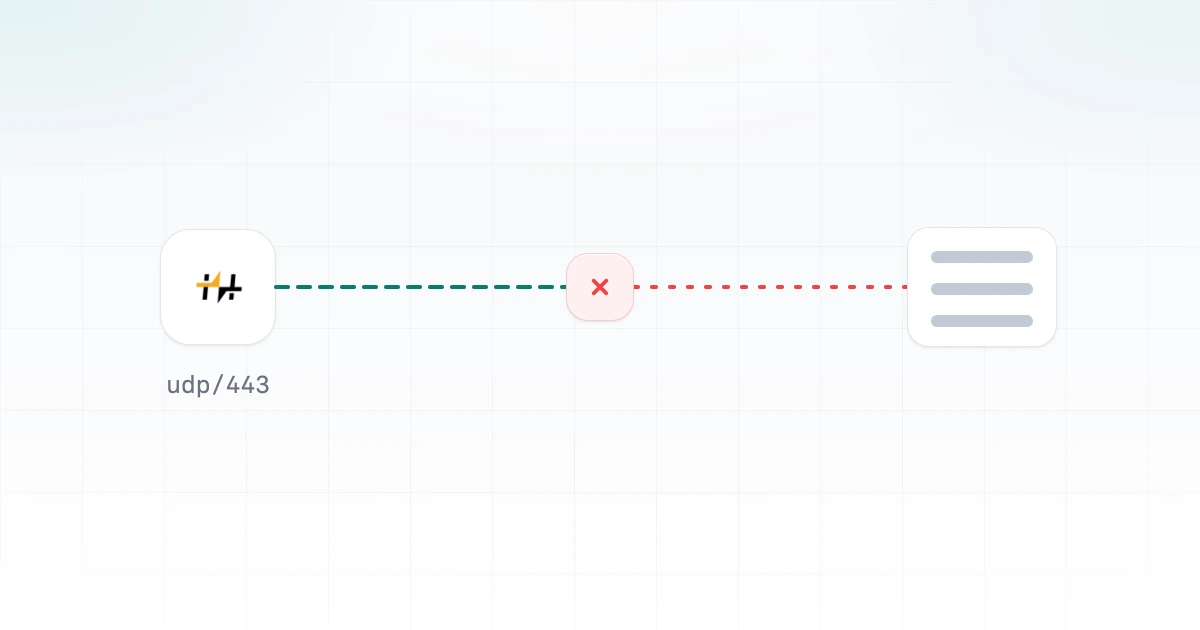
- UDP or QUIC blocked or throttled. Port hopping helps only when the limit is per port; for UDP as a whole, there is mimic, which disguises the connection as TCP but can't be combined with port hopping.
- Wrong auth: the server treats the client as an ordinary web visitor and serves the masquerade.
- An expired certificate, for example after an ACME renewal failed.
- A Salamander or Gecko password that differs between the two sides. The packets don't decode and are dropped without a reply.
- Bandwidth values set higher than the line can carry.
Now look at what a simple outside check sees in each broken state. A UDP port check against AmneziaWG passes, because a UDP port that drops everything looks open. A TLS check against a REALITY server with a broken key or user list passes, because unauthenticated connections reach the real target and get a valid certificate. An HTTP/3 request to a Hysteria2 server with broken auth gets a normal web response. Only a client that holds real credentials and completes the protocol can tell broken from healthy. The port monitoring post shows the same problem for plain WireGuard.
So which should I deploy?
Decide by what the networks your users are on actually block, and expect that to change over time.
- UDP works and WireGuard is fingerprinted. AmneziaWG. It gives a full device tunnel with simple apps, and it is the closest to plain WireGuard to operate.
- UDP or QUIC is blocked or throttled, and TLS to foreign sites still works. VLESS with REALITY on TCP port 443.
- Long or lossy paths where UDP gets through. Hysteria2, with bandwidth values set per client.
None of them is permanent. Amnezia's own docs say 2.0, like 1.5, "has become vulnerable to blocking" and recommend 3.1, and REALITY's safety depends on targets and IP ranges that change. That is why running two of them is common: REALITY on TCP 443 and Hysteria2 on UDP 443 can share one IP address, because TCP and UDP ports are separate. VLESS and Hysteria2 links can go into the same subscription; AmneziaWG ships as a .conf file or through the AmneziaVPN app.
How do I monitor all three?
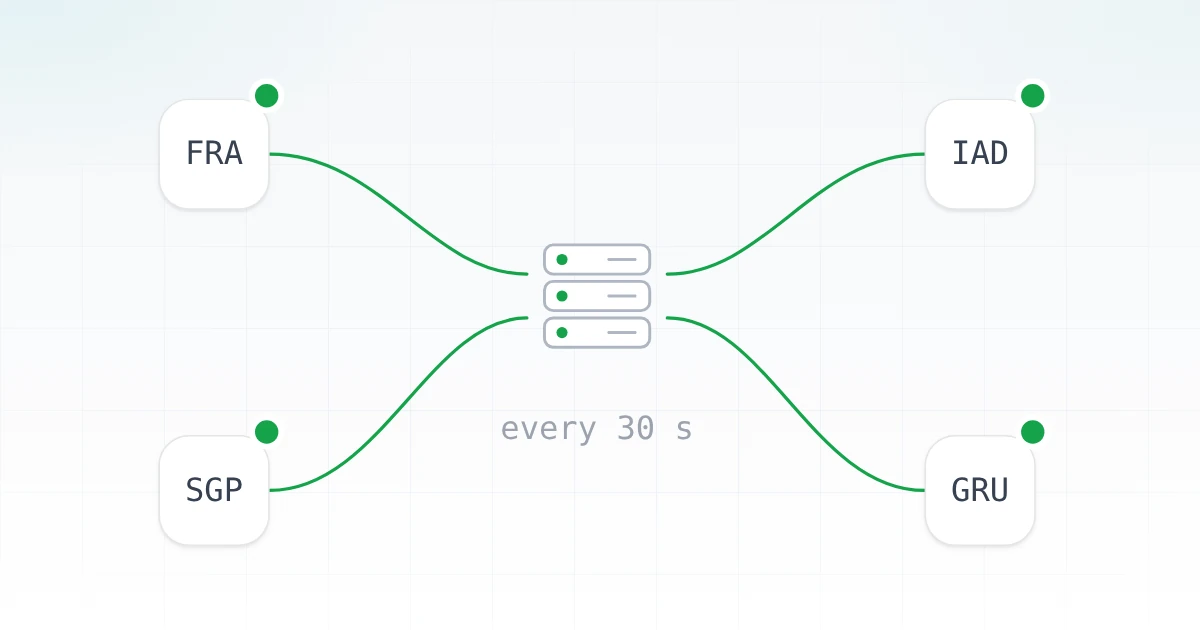
With a real client for each, from outside your network, on a schedule. For each server that means completing the AmneziaWG handshake with the right parameters, the REALITY handshake with the right key and shortId, and the Hysteria2 authentication, then sending traffic through the result.
Full disclosure: TunnelHQ does this for all three, along with eight other protocols. You paste the AmneziaWG .conf, the vless:// link or the hysteria2:// link, and it completes the real handshake from its checkers every 1 to 5 minutes, depending on plan, and alerts when it fails. To check a single config or link once, the free tester needs no account.